
01
The label
Independent, multi-genre, self-releasing. We own or license the masters, run the campaigns, and keep the artist relationship — which is what makes everything else possible.
Label · Platform · Sound wellness
More Bass signs and releases independent artists. The Bridge puts their music in front of the people who actually license it. The Sanctuary turns the same catalogue into sound wellness. One roster, one data layer, three ways a record pays.
The Bridge is pre-launch. Access is by invitation while we onboard the first artists.
How the pieces feed each other
A label without a pipeline reads a thousand submissions to find five. A platform without a real imprint has no one posting briefs on day one. Running both solves each other's hardest problem.
01 — SUPPLY
A multi-genre roster, self-released. Real masters, real campaigns, a real audience — the thing every marketplace pretends to have on launch day.
02 — MATCH
More Bass posts its own briefs and runs its own A&R through the filter. The platform's first gatekeeper is us, so it is useful before a single outside label joins.
03 — EXTEND
The same recordings, arranged for focus and rest. A second life for a master that has already been paid for once.
What More Bass is
01
Independent, multi-genre, self-releasing. We own or license the masters, run the campaigns, and keep the artist relationship — which is what makes everything else possible.
02
An AI-assisted A&R platform. Artists are scored against real briefs before they spend anything, and the people posting briefs see a shortlist instead of an inbox.
03
An AI prep desk for DJs. It reads the library you actually own and builds the set for the room you are actually playing — with the reason for every transition written down, in your own words.
04
A sound-wellness studio built on the same catalogue — frequency, breath and rhythm arranged for focus and rest rather than for the charts.
The Bridge
Submitting music is usually a coin flip you pay for. The Bridge inverts that: the analysis is free, the decision is yours, and the people on the other side have to actually listen.
The Stage
Labels, sync supervisors and publishers post what they need. Analyse your track against one for free and get a match score with specific reasons — BPM, key, mood, what fits and what does not. A credit is spent only when you decide to submit, and it comes back if nobody listens.
The Studio
Projects posted by people who need music made. Browse and apply, or post one and hire. Collaboration happens in Workrooms and the platform holds funds in escrow, so neither side is trusting the other on a handshake.
The Scene
Everyone here is vetted, so it is a shortlist rather than an open directory. Vibe Match scores how closely another artist's catalogue sits to yours — a number about the fit between two bodies of work, not about how good anyone is.
The Green Room
Forums, AMAs and Master Sessions with people who have actually done it. The business, the contracts, the rooms — the knowledge that usually only travels by knowing someone.
More Bass · DJ Brain
Most DJ tools recommend tracks they think you should own. DJ Brain reads the collection you actually have, and builds the set for the room you are actually playing.
Tonight
Tell it where you are playing, how long, and what time you are on. Move one slider between the tracks you know land and the ones you want to try. It comes back with the set, the phases, and a short list of what it deliberately did not do.
Every seam has a reason
Camelot key maths and a venue-by-time-of-day arc decide the order, and each join is named with why it works. Where you have written your own note on a track, that note is quoted back as the source of the instruction.
The Booth
A snapshot of the room when you ask for one — never a live meter running all night. No decibel readouts, no crowd score. The booth is for playing, not for staring at a dashboard.

And when it cannot tell, it says so. If your library will not support a verdict, DJ Brain returns nothing rather than a confident number — the same rule The Bridge follows when an analysis fails. A score you cannot trust is worse than no score.
Since 2015
More Bass did not begin as a label. It began as a streaming station in Scottsdale with a social feed bolted on, run by a DJ who could also write the code. Everything since has been the same idea getting more serious.
2015
Scottsdale, Arizona
More Bass was founded in August 2015 by Scott Weber — a working DJ, web developer and US Navy veteran — and morebass.com launched as an independent electronic-music streaming station with social features. The mission on day one was the one still printed on everything: connect artists, promoters and fans through music.
A place where fans and artists could truly come together and share their music the way I thought everyone would want to.Scott Weber, PR Newswire, 2016
2016
Old Town Scottsdale
The first More Bass event ran at Wasted Grain in Old Town Scottsdale in May 2016, headlined by Ali Stone. That November the company went to press positioned squarely against the incumbents — PR Newswire carried it as “More Bass Goes Head to Head with iHeartRadio, TuneIn and Tidal with the First True Social Music Solution.”
Radio
More Bass Radio
More Bass Radio is the thread that runs through everything else. Akeru joined as resident DJ and his mix series The Open Door became the flagship show — 216 episodes to date, still running. A label that started as a radio station never really stopped being one.

The station was a browser, not a playlist. It carried other people's rooms alongside its own — deep house, progressive, and whoever was live that night — and the listener counts beside each one were the whole point. You could see where the room was.

2017
Scottsdale
By 2017 the company was a team of twelve, including a CTO, a CRO and a CFO, had raised its first outside capital and was working with Hool Coury Law. This is the stretch that proved the idea could carry a business — and taught the lessons the 2026 version is built on.
2022
Black Rock City → Las Vegas
Between 2022 and 2024 Scott returned to performing: Burning Man in 2022 and 2023, a Las Vegas run, and a residency on ViBE 99.7 FM. It was not a detour. Those rooms are where he met the engineers who now mix the label’s records.
2024
The studio
In 2024 More Bass became a studio and a label. Sarah Yong’s twelve-track debut and the Ascot Gordon record were written and produced with Akeru inside nine months — and the whole process was filmed, as The Making of Sarah Yong.
My goal now is using technology and teaching people how to make professional music studio quality remotely, which expands the talent pool… while still focusing on the original artist performances that AI can’t replicate.Scott Weber to APM Music, April 2025
2026
Everywhere
The software More Bass built to get its own artists heard is now a product. The Bridge opens to artists outside the roster, DJ Brain ships alongside it, and the records go to mix with engineers from the Marley and Patchwerk circles. Eleven years in, it is a studio, a label, a radio network and a software company.
How it is built
The Bridge and DJ Brain are not one-off builds. They sit on Infinity.Press, a production framework for agentic AI applications, which is the reason a label our size ships software that behaves like software from a company ten times the size.

Engineered to a standard
The framework carries the parts that are easy to skip and expensive to retrofit - typed boundaries, hardened rules, keyboard and screen-reader support - so they are there on day one rather than after an audit.
The same spine underneath
Auth, payments, data and hosting arrive connected and tested rather than assembled per project. It is why a fix made once shows up across every More Bass product instead of being re-derived in each one.
Maya
Infinity.Press ships Maya, a production voice agent that picks up, qualifies and books. It is the clearest statement of the framework's own standard: the thing has to work when a real person calls it.
Who we build with
More Bass does not pretend to be a whole industry on its own. Two partnerships carry the parts we would otherwise be guessing at — how DJs are actually taught, and how the software gets built and kept running.
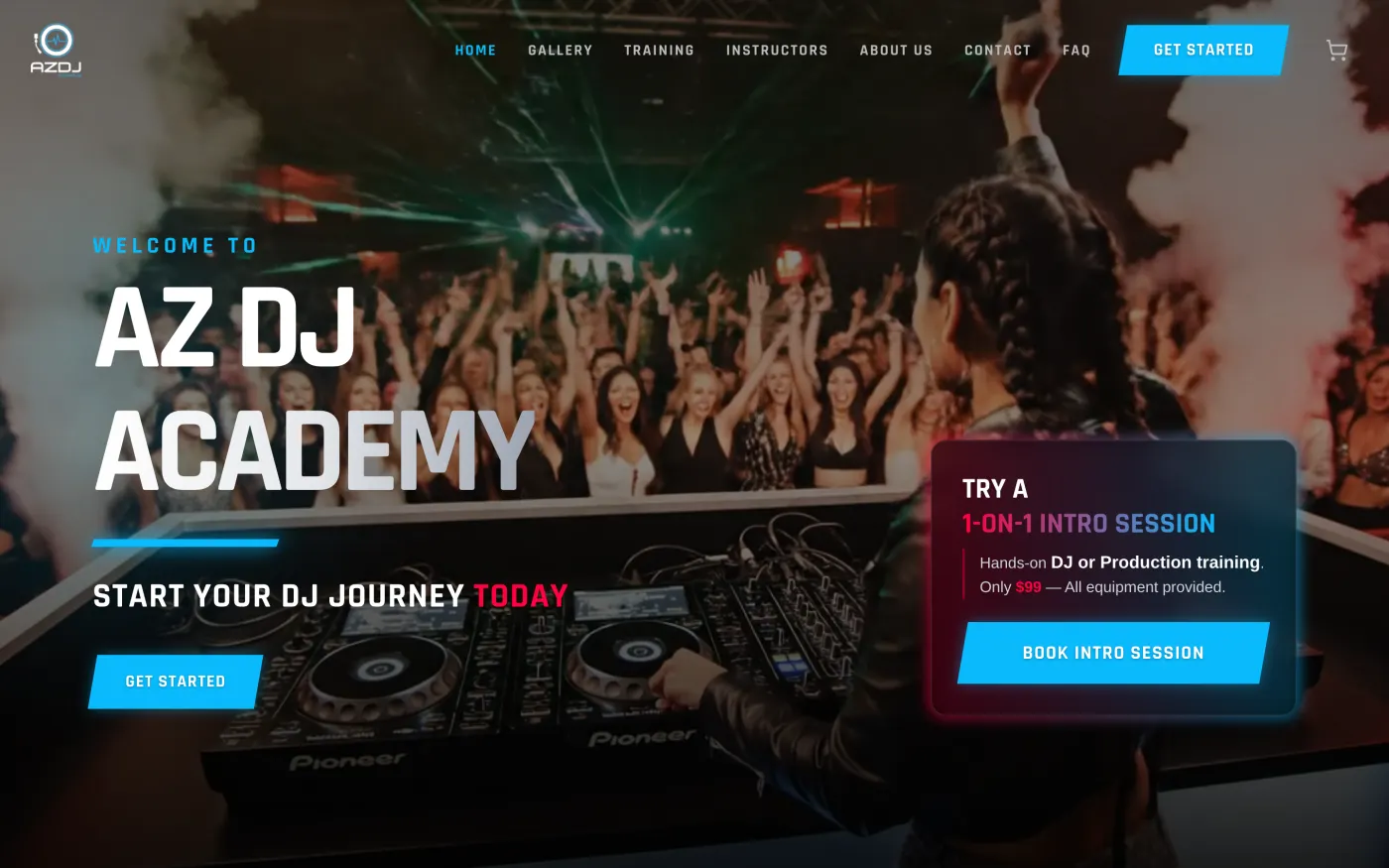
Premier DJ and music production training in Arizona, one-on-one and in person. They teach the craft the way it is actually learned — on real gear, in real rooms, with someone watching your hands. That is the ground truth DJ Brain is built against, and the reason it argues in a working DJ's language instead of a recommender's.
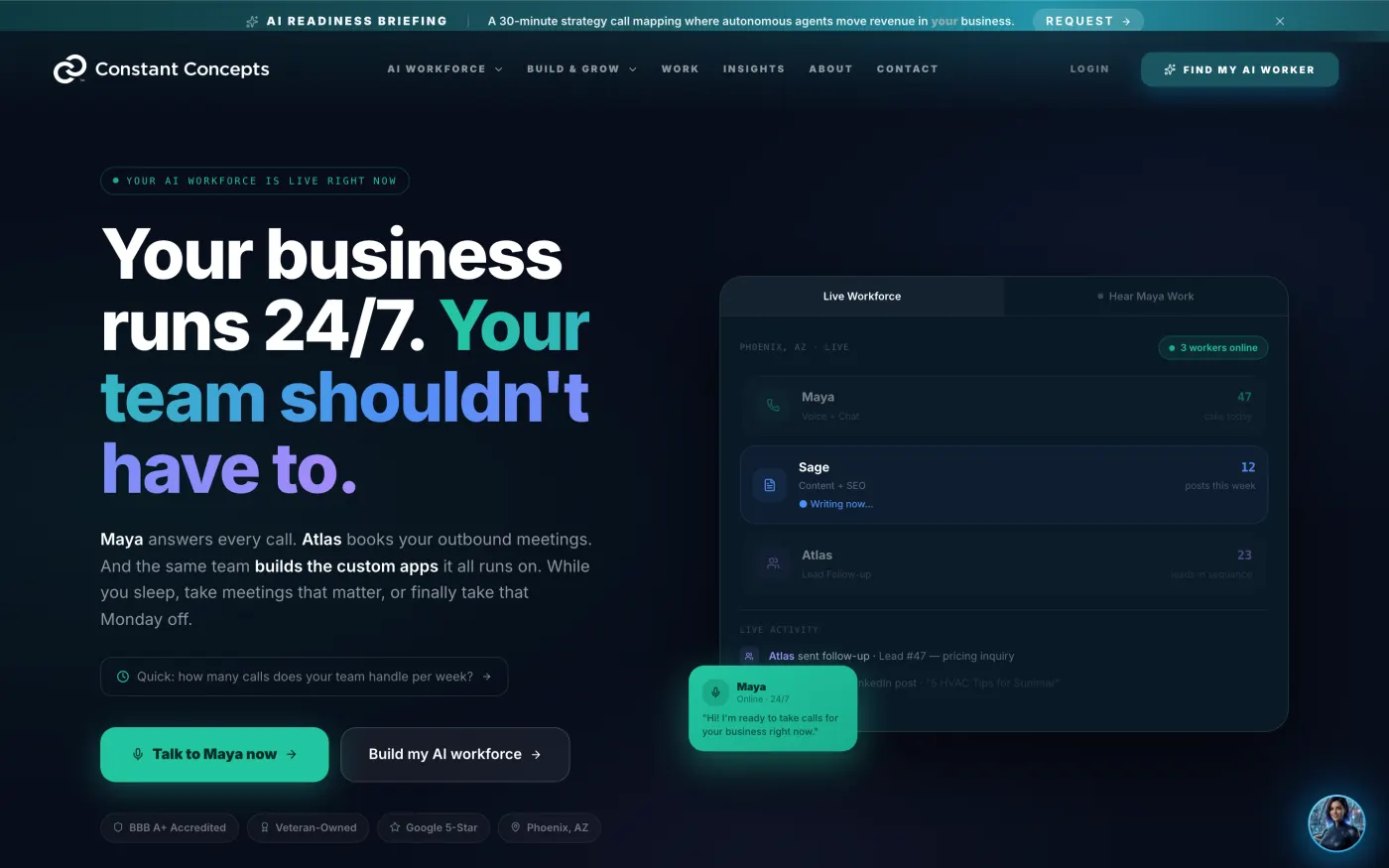
The agentic AI studio in Phoenix that designs, builds and runs the More Bass platform stack — The Bridge, DJ Brain and everything underneath them. They are the reason a label this size ships software at all, and the reason it is held to a standard rather than to a deadline.
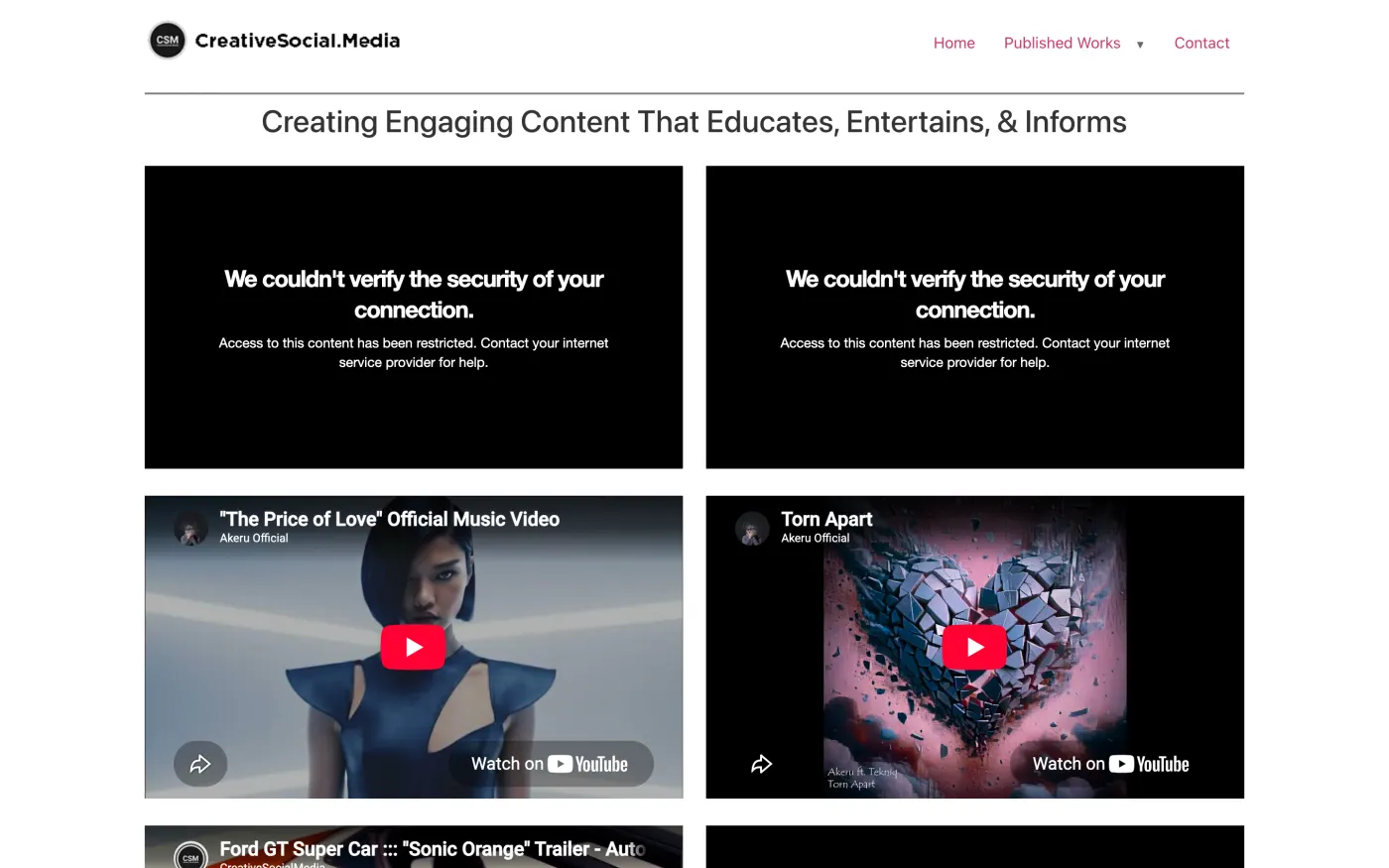
Kevin and Hoss make the content - the work that has to educate, entertain and inform all at once, which is a far harder brief than it sounds. A label can write about its artists; it takes people who do this for a living to make anyone actually watch.
The Sanctuary
Not a playlist. A synthesis engine that builds the audio live — Solfeggio frequencies and 432Hz tuning layered with binaural beats, Schumann-resonance nodes, and a breath cycle the rhythm actually follows. Three lo-fi protocols, from a 60 bpm minimal pulse to an 84 bpm organic drift.
The Sanctuary is meditation and focus audio. It is not medical treatment, it does not diagnose or cure anything, and nothing here is a substitute for professional care.
Straight answers
Both, deliberately. The label signs and releases artists; The Bridge is the platform that matches their music to briefs and handles paid collaboration. Each solves the other's cold-start problem — the label gets a data-driven A&R pipeline, and the platform gets a real imprint posting real briefs from day one.
It listens to your track and compares it to a specific brief — tempo, key, mood, instrumentation, production — then returns a match score from 0 to 100 with the reasoning behind it. It is an assessment of fit between one track and one brief. It is not a judgement of the music, and it is not a decision: the people who posted the brief make that.
Analysing a track against a brief is free. A credit is spent only when you choose to submit, and it is returned if the recipient rejects your track without listening to it. Subscription and credit pricing is being finalised ahead of launch — we would rather publish nothing than publish a number that changes.
The Bridge is pre-launch and access is by invitation while we onboard the first artists. If you already have an invitation code, use the link you were sent. A public waitlist opens shortly.
The platform does not take rights in your recordings. Signing to the More Bass label is an entirely separate conversation with its own agreement — using The Bridge does not sign you to anything.